Retaining Walls & Concrete Masonry
Structural retaining walls and masonry work that prevent erosion and add usable space to your property.
Why You Might Need a Retaining Wall
If your property has slopes or elevation changes, a retaining wall can solve multiple problems while adding usable space. Retaining walls hold back soil to create level areas for patios, driveways, gardens, or lawns. They prevent erosion by stopping soil from washing down slopes during heavy rain. Without proper retaining structures, hillside properties can lose topsoil, develop gullies, and even experience foundation problems as soil shifts.
Many Westford properties have natural slopes that limit how you can use your land. A well-designed retaining wall system can transform sloped areas into terraced spaces perfect for gardening, outdoor living, or additional parking. The walls create defined levels that are easier to maintain than slopes. You will spend less time mowing steep hills and more time enjoying functional outdoor spaces. Retaining walls also add architectural interest and can significantly increase your property value.
Proper retaining wall design and construction require expertise. Walls must be engineered to withstand the pressure of soil and water pushing against them. Poor construction leads to walls that lean, crack, or fail completely. We design retaining walls based on the height needed, soil conditions, and drainage requirements. Our walls include proper footings, drainage systems, and reinforcement. When you work with experienced professionals, you get a retaining wall that performs reliably for decades while enhancing your property.
Types of Retaining Walls We Build
Poured Concrete Retaining Walls
Poured concrete retaining walls are the strongest and most permanent option. These walls are built by setting forms and pouring concrete to create a solid structure. We start with a deep footing below the frost line that anchors the wall. The wall itself is reinforced with rebar to handle tension and prevent cracking. Thickness varies based on wall height but typically ranges from 8 to 12 inches or more for taller walls.
Poured concrete walls can be finished in different ways. A basic smooth finish is economical and clean-looking. Form liners can create texture resembling stone or brick. The concrete can be colored or stained for visual appeal. We install weep holes or drainage pipes through the wall to prevent water buildup behind it. Proper drainage is critical for retaining wall longevity. Poured concrete works well for walls over 4 feet tall and situations requiring maximum strength.
Concrete Block Retaining Walls
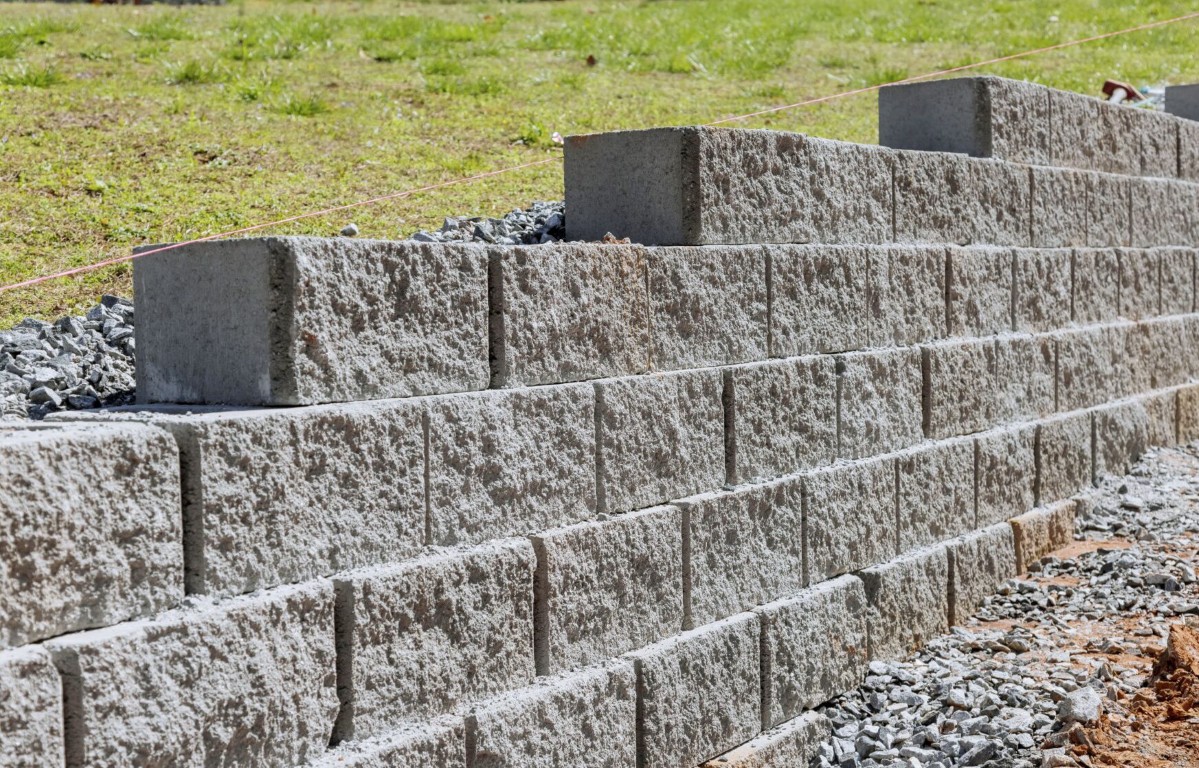
A block retaining wall uses interlocking masonry units to create the retaining structure. These blocks come in various styles from basic gray to decorative options that mimic natural stone. The blocks are stacked on a compacted gravel base. Many systems use interlocking features that align the blocks and add strength. Vertical cores in the blocks are filled with concrete and rebar for reinforcement.
Block walls are often more economical than poured concrete for shorter walls under 4 feet. They install relatively quickly and offer many design options. The modular nature of blocks makes it easier to create curves or follow irregular terrain. Proper construction still requires a solid footing, drainage behind the wall, and correct backfill procedures. We have experience with multiple block systems and can recommend the best option for your project.
Masonry and Stone Veneer Walls
For a more upscale appearance, natural stone or manufactured stone veneer can be applied to concrete retaining walls. The concrete provides structural strength while the stone facing creates beautiful aesthetics. This combines the durability of concrete with the timeless look of stone. Stone veneer comes in many styles including fieldstone, ledgestone, and ashlar patterns. You can choose colors that complement your home and landscape.
We also build traditional dry-stack stone walls for certain applications. These walls use natural stone without mortar, relying on careful fitting and gravity for stability. Dry-stack walls work well for shorter heights and rustic settings. They allow water to drain freely between stones. While beautiful, they require skilled craftsmanship to ensure long-term stability.
Additional Masonry Services
Beyond retaining walls, we provide various concrete and masonry services:
- Concrete or block foundation walls for buildings
- Freestanding decorative walls for privacy or boundaries
- Concrete or masonry columns and pillars
- Steps and terracing between wall levels
- Seat walls integrated into patios or landscape designs
- Outdoor fireplaces and fire pits with masonry surrounds
- Planters and raised garden beds
Whatever structural or decorative masonry you need, we have the skills and equipment to build it. We can work from your plans or help design solutions that meet your needs and budget.
Our Retaining Wall Construction Process
Site Assessment and Design
Building a successful retaining wall starts with understanding your site. We evaluate the slope, soil conditions, and drainage patterns. Different soils exert different pressures on retaining walls. Clay soils hold water and create more pressure than sandy soils. We may recommend soil testing for larger or critical walls. We also check for underground utilities and consider access for equipment.
Based on this assessment, we design a wall system appropriate for your situation. This includes determining wall height, thickness, footing requirements, and drainage needs. For walls over 4 feet tall, engineering may be required by local building codes. We coordinate with engineers when needed to ensure your wall meets all structural and legal requirements. Our design balances function, aesthetics, and budget to give you the best solution.
Excavation and Foundation Work
Construction begins with excavation. We dig down to below the frost line for the footing. In Massachusetts, this typically means going at least 4 feet deep. The footing trench is wider than the wall to provide a stable base. We install and compact gravel in the bottom of the trench for drainage and support. For poured concrete walls, we build forms and place rebar reinforcement before pouring the footing.
Once the footing cures, we proceed with the wall itself. For poured walls, this means setting forms for the full wall height and placing reinforcement. For block walls, we begin laying courses on the cured footing. The first course must be perfectly level and aligned because it determines the accuracy of everything above. We use levels, string lines, and laser equipment to ensure precision throughout the construction.
Drainage and Backfilling
Proper drainage is the most important factor in retaining wall longevity. We install perforated drain pipe behind the wall at the footing level. This pipe collects water and carries it away before pressure builds up. We also place a layer of drainage gravel behind the wall. This gravel allows water to flow down to the drain pipe rather than saturating the soil and pushing on the wall. A filter fabric separates the drainage stone from the native soil to prevent clogging.
Backfilling is done in layers with careful compaction. Each layer is compacted before adding the next. This prevents settlement that could damage the wall or create uneven surfaces above. We work carefully to avoid damaging the drainage system during backfill. The top layer of backfill is graded to slope away from the wall, directing surface water away from the structure.
Finishing Touches
After the wall is complete and backfilled, we add finishing elements. This might include cap blocks or stones on top of the wall for a finished appearance and weather protection. Steps or terracing may be added to connect different levels. We coordinate with your landscaping plans so the wall integrates smoothly with the rest of your property. All construction debris is removed and disturbed areas are graded and prepared for grass or plantings. The result is a functional, attractive retaining wall that solves your erosion problems and adds to your property value.