Sidewalks, Walkways & Flatwork
Safe, attractive concrete pathways that connect your property and enhance curb appeal.
Creating Functional and Beautiful Pathways
Sidewalks and walkways serve important functions on your property. They provide safe paths for walking, protect your lawn from foot traffic, and guide visitors to entrances. Well-designed concrete paths also add significant curb appeal and can increase your property value. A cracked or uneven walkway creates safety hazards and looks neglected. Fresh, properly installed concrete paths make your home more welcoming and accessible.
Concrete is an ideal material for walkways because it handles foot traffic without wearing down. Unlike gravel that scatters or pavers that can shift and create trip hazards, solid concrete stays put and remains level. It provides a stable surface for people using walkers or wheelchairs. Snow and ice removal is easier on smooth concrete compared to other materials. With proper installation and minimal maintenance, your concrete walkways will serve you reliably for decades.
We design and install all types of concrete flatwork including front walkways leading to your entrance, side paths connecting different areas of your property, backyard paths to sheds or gardens, and public sidewalks along streets. Whether you need a simple straight path or a curved walkway with decorative elements, we have the experience and skills to build it right. Every project starts with understanding your needs and creating a plan that works for your property and budget.
Types of Concrete Flatwork We Install
Front Walkways and Entryways
Your front walkway is often the first thing visitors see. It should be wide enough for comfortable walking, typically 3 to 4 feet for a primary path. The walkway should have a gentle slope for drainage but remain easy to navigate. We ensure proper grading away from your home to prevent water from flowing toward the foundation. Curves and angles can add visual interest while guiding traffic naturally toward your entrance.
Front walkways can be customized with different finishes and borders. A broom finish provides good traction and a clean look. Stamped or decorative concrete creates an upscale appearance. Borders in contrasting colors define the edges and add character. Where the walkway meets your driveway or street, we create smooth transitions that look professional and prevent trip hazards.
Side and Backyard Paths
Paths along the side of your house provide access to backyards, basement entrances, or utility areas. These paths are usually narrower than front walkways, often 2 to 3 feet wide. They need to be durable because they often serve as work areas where you might push wheelbarrows or move equipment. Proper drainage is critical in side yards where water can be trapped between buildings or fences.
Backyard paths connect patios, sheds, gardens, and other features. These can follow straight lines for efficiency or curve naturally through landscaping. The width depends on use. A path to a shed might be 3 feet wide to accommodate a lawn mower, while a garden path can be narrower and more decorative. We work with your landscape design to create paths that feel integrated rather than like afterthoughts.
Public Sidewalks and Municipal Work
If you need to install or replace the public sidewalk in front of your property, we handle all aspects including obtaining necessary permits. Public sidewalks must meet specific municipal requirements for width, thickness, slope, and accessibility. We are familiar with local codes in Westford and surrounding communities. The typical public sidewalk is 4 to 5 feet wide and 4 inches thick. We ensure proper grading for drainage and ADA compliance where required.
Additional Flatwork Applications
Beyond walkways and sidewalks, we install various other concrete flatwork:
- Aprons connecting driveways to garages or streets
- Landings at doors and entryways
- Ramps for accessibility compliance
- Service areas around air conditioners or pool equipment
- Trash and recycling bin pads
- Pet runs and kennel areas
- Paths between buildings on commercial properties
Whatever flat concrete surface you need, we have the equipment and experience to install it properly. We handle projects of all sizes from small landing pads to extensive sidewalk systems.
Our Installation Process
Planning and Layout
Good walkway installation starts with careful planning. We walk your property with you to understand how you use the space and where paths are needed. We consider traffic patterns, landscaping, drainage, and accessibility. For front walkways, we think about how the path presents your home. Should it be straight and formal or curved and welcoming? How does it relate to your driveway and landscape plantings?
We mark out the planned path using stakes and string so you can visualize the layout before we dig. This is your chance to make adjustments to width, curves, or placement. We discuss finish options and any special features like borders or steps. For projects requiring permits, we handle the paperwork and inspections. Once the plan is finalized, we schedule the work for a time that minimizes disruption to your routine.
Excavation and Base Preparation
We excavate the walkway area to a depth of 6 to 8 inches. This allows room for a gravel base and the concrete itself. All sod, roots, and organic material are removed because they would decompose and cause settling. We install a 3 to 4 inch base of crushed stone. This base provides drainage so water does not pool under the concrete. We compact the stone thoroughly using mechanical equipment. A well-prepared base is critical for preventing cracks and settling.
Forms are set to define the edges of the walkway. For straight paths, we use lumber. Curved paths require flexible forming materials. The forms are carefully leveled and set at the proper slope for drainage. We typically slope walkways 1/4 inch per foot away from buildings. This slope is gentle enough for easy walking but sufficient for water runoff. Any utilities or irrigation lines are located and protected before we pour.
Concrete Placement and Finishing
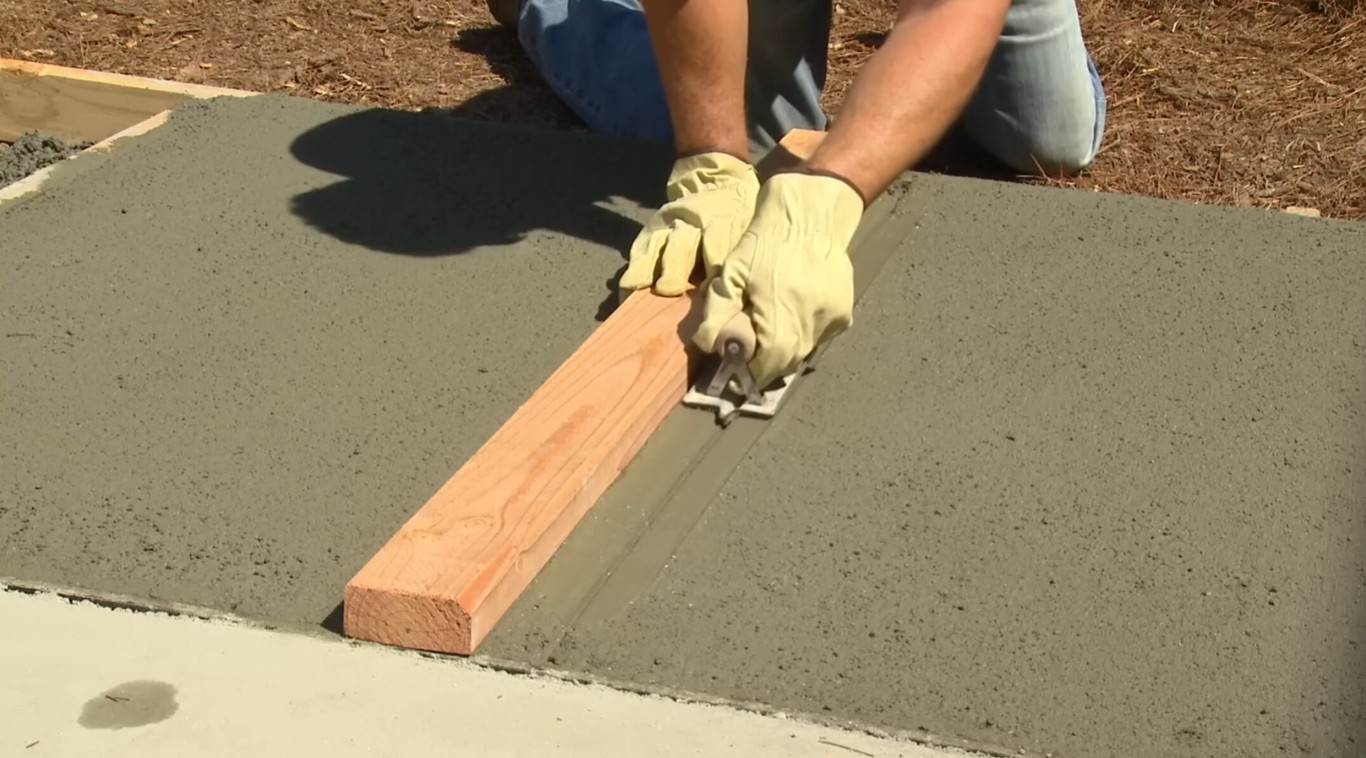
Concrete is poured and spread within the forms. Walkways are typically 4 inches thick, providing adequate strength for foot traffic. We screed the surface level and use hand floats to smooth it. The finishing technique depends on your preference. Most walkways get a broom finish for slip resistance. The broom creates fine grooves that provide traction without being rough. For a smoother look, we can trowel finish the surface.
Control joints are tooled or saw-cut to manage cracking. These joints divide the walkway into sections and allow for minor movement. The joints are typically spaced every 4 to 5 feet. Edges are rounded slightly to prevent chipping. After finishing, we apply a curing compound and protect the concrete from traffic. You can typically walk on the new walkway after 24 to 48 hours, though full strength develops over several weeks.
Cleanup and Final Details
Once the concrete has cured sufficiently, we remove the forms and clean up the work area. Soil along the edges is replaced and graded to meet the new walkway. We haul away all debris and excess material. Any disturbed landscaping is restored as much as possible. The result is a clean, professional installation that looks like it has always been part of your property. We walk through the completed work with you to ensure you are satisfied with every detail.